

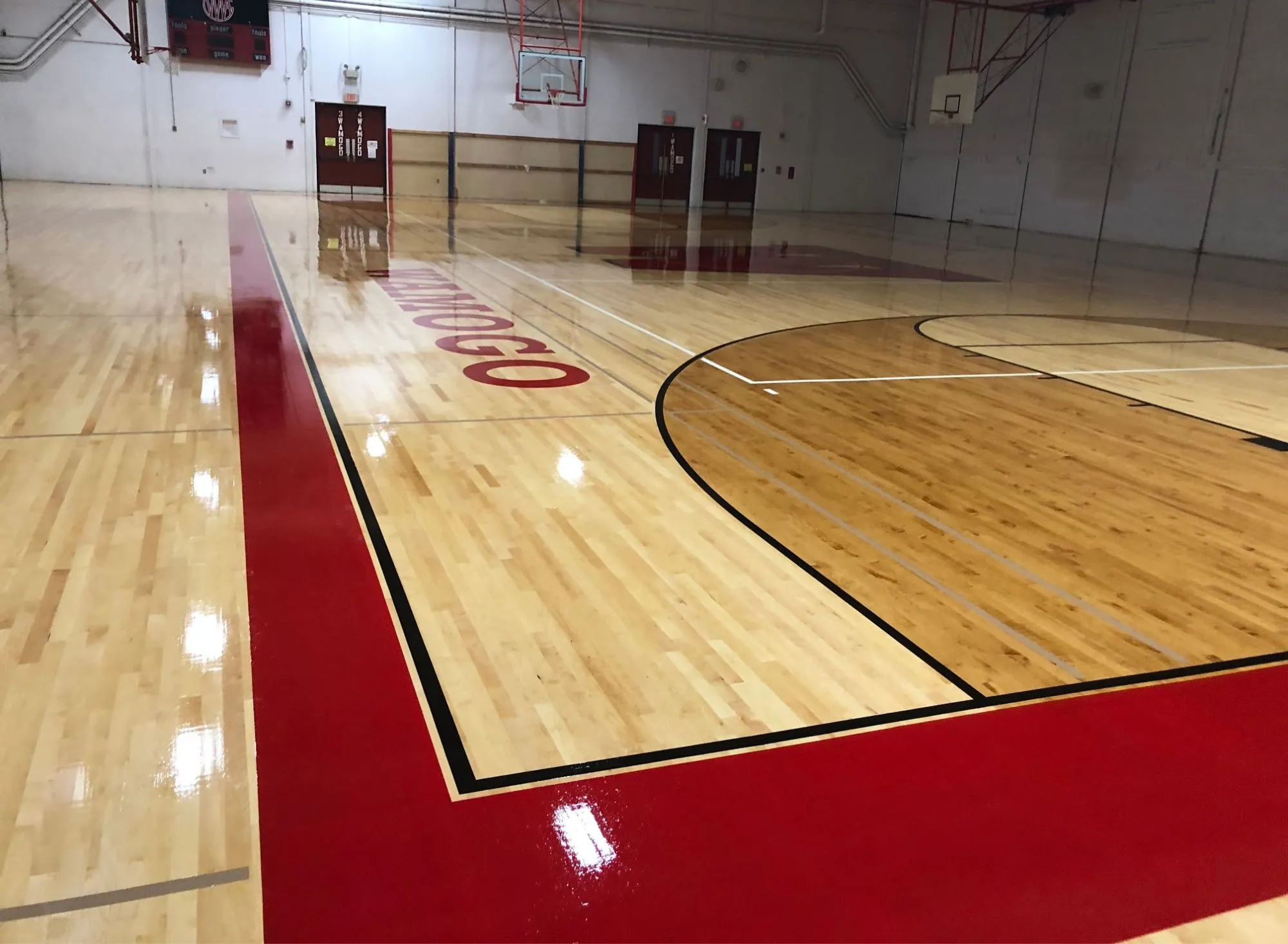
Rock Salt & Slippery Gym Floors in Winter: How to Protect Your Court
Rock salt and ice melt are two of the biggest winter threats to a wood gym floor. The crystals act like sandpaper under shoes, scratching and dulling the finish. The salty water left behind leaves a film that makes the court slippery and can let moisture get into the wood. The fix is simple but takes daily discipline: stop salt at the door, sweep it up fast, and clean only with products your finish manufacturer approves.
Below is what salt actually does to a gym floor, how to tell if it is already causing trouble, and a winter routine that keeps your court safe through the end of basketball season.
Why Rock Salt Is So Hard on Gym Floors
Every snowy morning, students, players, parents and staff walk across salted parking lots and sidewalks. Some of that salt rides into the building on their shoes. Once it reaches the gym, it causes three problems.
1. Scratches and a dull finish
Salt crystals, sand and small pebbles are abrasive. The Maple Flooring Manufacturers Association (MFMA) warns that debris, salt and pebbles “can damage the finish coatings and surface of the maple flooring” (MFMA, Floor Surface Protection). Each scratch is small, but thousands of footsteps add up to traffic lanes that look gray and worn by February.
2. A slippery film
When salty slush dries, it leaves a white, powdery residue. That residue, plus the fine grit that comes with it, sits between shoe soles and the finish. Players lose grip, and a floor that felt fine in October suddenly feels slick. Dust and grit are some of the most common reasons a gym floor feels slippery, and winter brings a lot more of both.
3. Moisture in the wood
Melting snow is water, and water is a wood floor’s worst enemy. MFMA notes that snow or water carried in from open doors or foot traffic “can introduce unwanted moisture into the area,” which can damage the finish or throw off the moisture balance of the maple. Puddles near entrances that sit for hours can lead to raised grain, stains or cupped boards.
Warning Signs That Salt Is Already Hurting Your Floor
- White haze or streaks near doors, along traffic paths or under the bleachers.
- Gray, dull lanes where the finish is wearing faster than the rest of the court.
- Players slipping or complaining about poor traction, especially near entrances.
- A gritty feel underfoot even after the floor has been dust mopped.
- Dark spots or raised boards near exterior doors, which can mean water is getting into the wood.
If you see dark or raised boards, call a gym floor professional. That is a moisture problem, not just a cleaning problem.
A Winter Routine That Keeps Salt Off the Court
Stop salt at the door
The cheapest salt to deal with is the salt that never reaches the court. Put walk-off mats at every entrance to the gym, including side doors used by teams and custodians. MFMA recommends walk-off mats at gym entry points to catch debris, water and snow before it reaches the maple. Use a scraper-style mat first and an absorbent mat after it. Read more in our guide to protecting high-traffic areas.
Set a clean-shoe rule
Ask players and coaches to change into clean court shoes at the door. Post a simple sign: “No street shoes on the gym floor.” For events, use a gym floor cover so guests can walk in winter boots without grinding salt into the finish.
Dust mop more often
MFMA recommends sweeping the floor daily with a properly treated dust mop, and up to three times a day if the floor sees heavy use. In winter, that heavier schedule is worth it. Sweep before practice, between sessions and at the end of the day. Pay extra attention to the first 15 to 20 feet inside each door.
Wipe up wet spots right away
Keep a stack of clean microfiber towels near each entrance. If someone tracks in slush, wipe it up before it can dry into a salty film or soak into the boards.
Clean salt film the right way
Do not flood the floor with a wet mop and bucket. MFMA calls water a maple floor’s worst enemy and says never to use household cleaning products, which can leave floors sticky or slippery. Instead, use the cleaner recommended by your finish manufacturer, lightly misted and wiped up with a microfiber pad. If your custodial team runs an auto scrubber on the gym, in our experience it can clean salt well when it’s used properly: minimal water, the right pads and an approved cleaner, one quick pass and fast drying. We cover the step-by-step method in how to remove salt residue from a gym floor.
Keep the HVAC running
Winter heating dries out the air. MFMA recommends keeping indoor relative humidity in a stable 15% range (for example, 35% to 50%) and not shutting the HVAC system down for long periods. Big swings in humidity make the boards shrink and swell, which makes salt damage and gaps worse.
When Cleaning Is Not Enough
If the court is still slippery after proper cleaning, or the finish is worn through in the traffic lanes, the floor likely needs a screen and recoat. Screening lightly abrades the old finish so a fresh coat can bond, which restores shine and helps restore traction. If salt and water have worn through the finish into the bare wood, a full sanding and refinishing may be needed. Damaged boards near doors can often be cut out and replaced with our gym floor repair services.
Many schools schedule a recoat over holiday break or right after the winter sports season so the court is fresh before spring events. See our screen and recoat FAQ for timing tips.
Your Winter Salt Checklist
- Scraper mat plus absorbent mat at every gym entrance
- Mats lifted and cleaned daily, with the floor cleaned underneath
- Clean court shoes only on the playing surface
- Dust mop up to three times a day during heavy use
- Towels at each door for wet spots
- Only finish-manufacturer-approved cleaners, never a soaking wet mop; auto scrubbers only with minimal water and a quick, fast-drying pass
- HVAC on and humidity kept steady
- Floor covers for any event with street shoes
Frequently Asked Questions
Does rock salt ruin a gym floor?
Rock salt won’t usually ruin a floor overnight, but it does steady damage. The crystals scratch the finish, the dried residue makes the court slippery, and the melted snow it comes with can get into the wood. Good matting and daily dust mopping prevent most of it.
Is ice melt safer for gym floors than rock salt?
Any ice melt product that gets tracked inside can scratch the finish and leave residue. Some leave an oily or sticky film. The safest approach is to keep all of it outside with mats and clean shoes, whatever product your grounds team uses.
Why is our gym floor more slippery in winter?
The most common reasons are salt residue, extra dust and grit tracked in from outside, and moisture from wet shoes. A worn finish can make it worse. Proper cleaning usually helps. If it doesn’t, the floor may need a screen and recoat.
Can we wet mop the salt off?
No. Wet mopping puts too much water on the wood, and MFMA calls water a maple floor’s worst enemy. Use your finish manufacturer’s cleaner, lightly misted and wiped up with microfiber. In our experience, an auto scrubber can also work if it’s set for minimal water and the floor dries fast, but not on a newly installed or newly finished floor until it has cured.
Get Help Protecting Your Gym Floor This Winter
J&J Gym Floors has cared for gym floors since 2001, with more than 20 years of experience and 50,000+ projects for schools, churches, clubs, colleges and home gyms. If your court is slippery, dull or showing salt damage, we can take a look and recommend the right fix. Call 973-801-7219 or email john@gymfloors.com for a quote.
