

Since 2001 · NJ · NY · CT & the East Coast
Damage Fixed Right.
Gym Floor Repair Services
We fix dead spots, loose and damaged boards, gaps, buckling and water damage, matching new boards to your floor so your court is safe and plays right again.

What’s Included & How the Job Goes
Every repair starts with finding the real cause, not just the damage you can see.
What’s Included
- A visual inspection of the whole floor
- Moisture testing of the wood and subfloor
- Subfloor evaluation
- Board replacement, matched to your existing floor
- Fixes for gaps, loose boards, buckling and water damage
- Sanding and refinishing when the repair calls for it
How It Goes
- Assessment and planning
- Damaged boards cut out and removed
- New boards matched, fitted and secured
- Sanding and refinishing where needed
- Spot repairs for small, localized damage
To prevent repairs: screen and recoat every year, and a full sand and refinish every 6–10 years.
Our Work
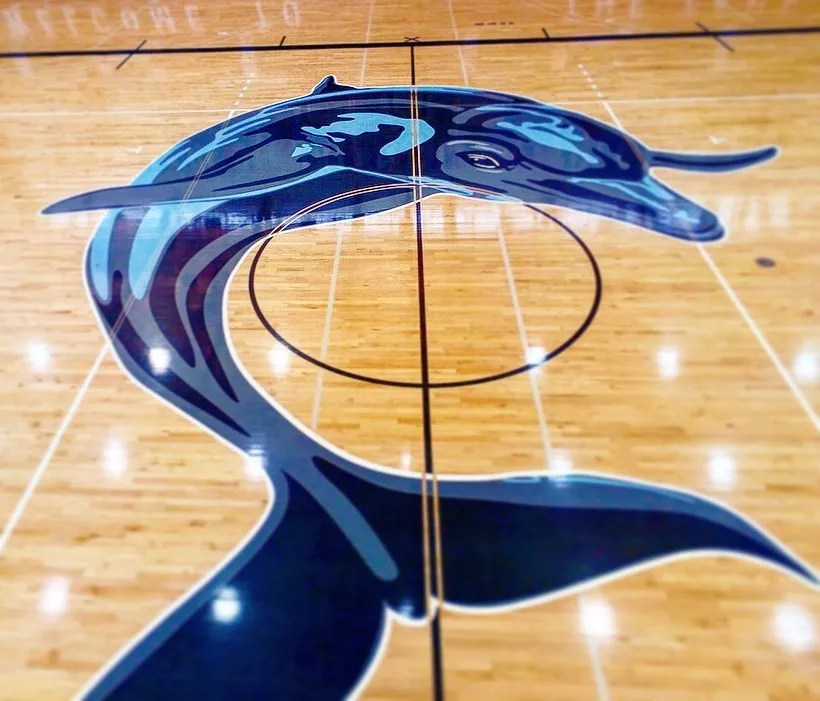
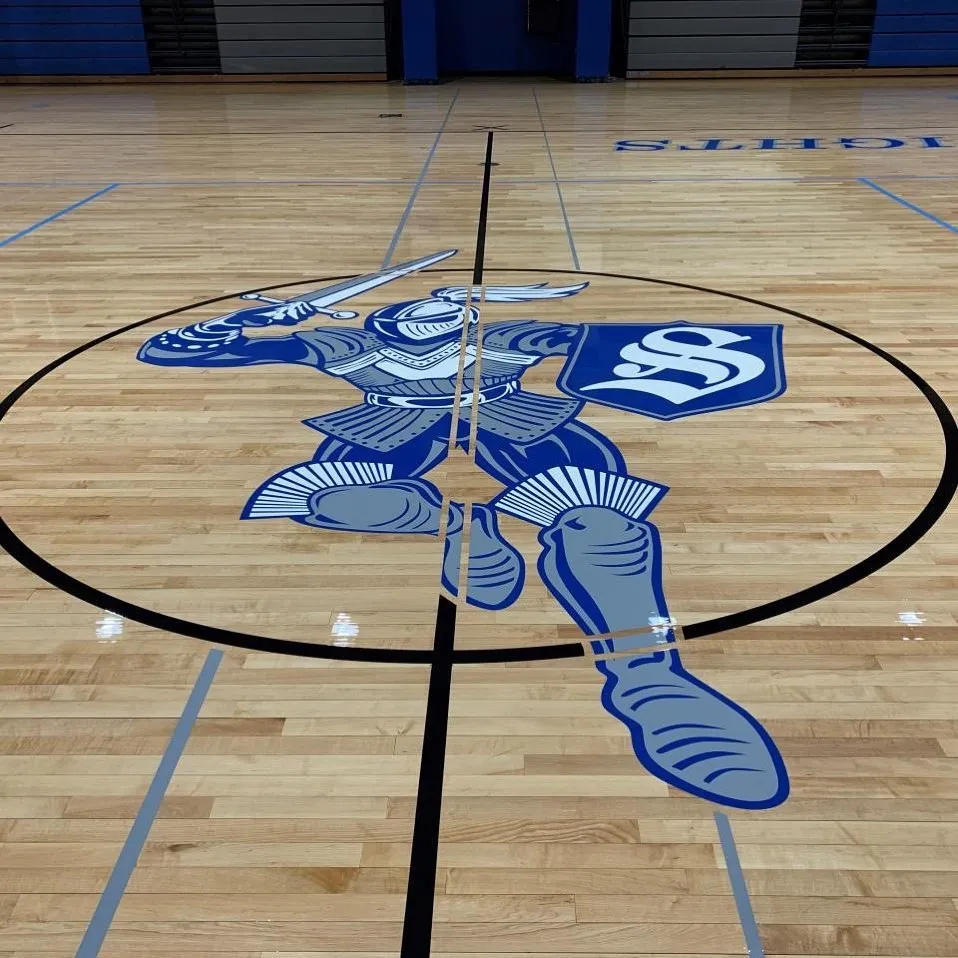
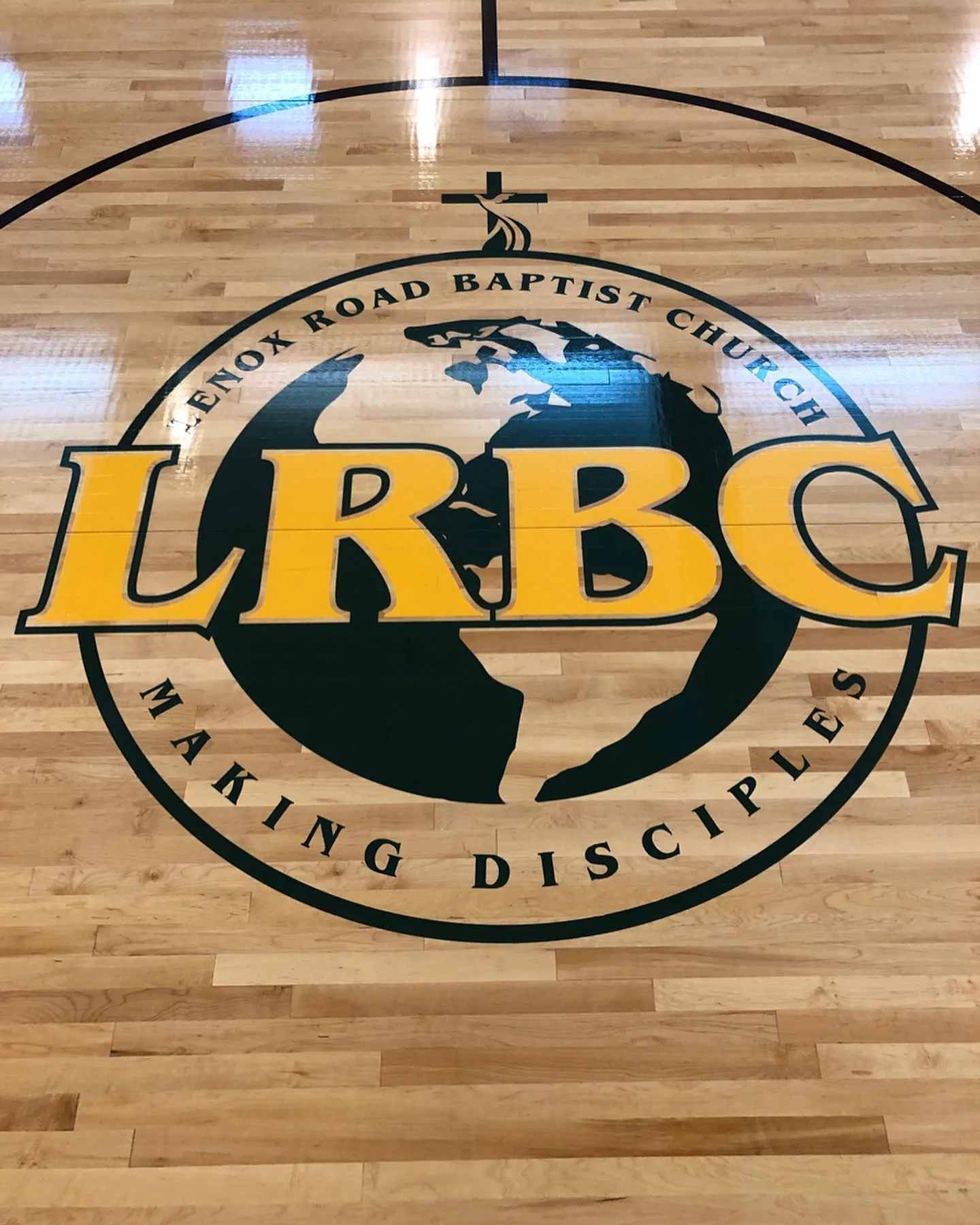
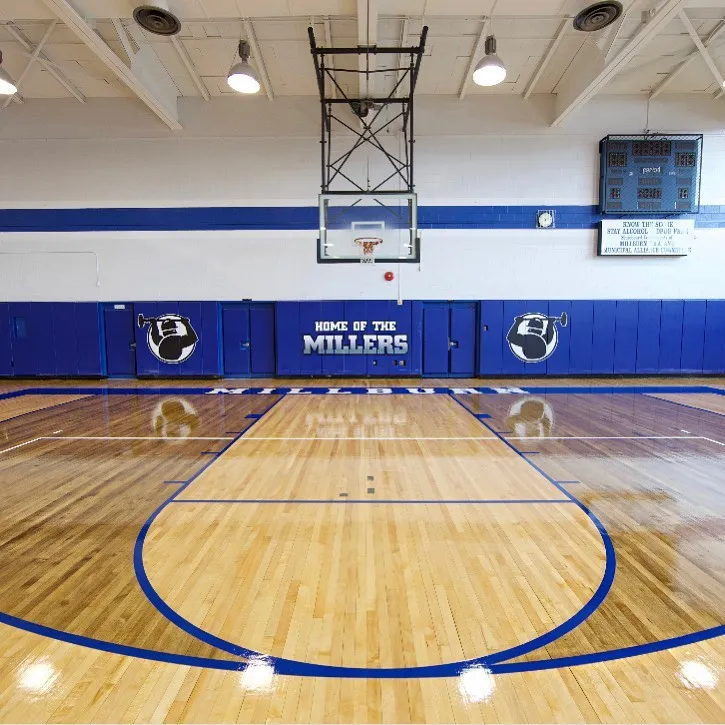
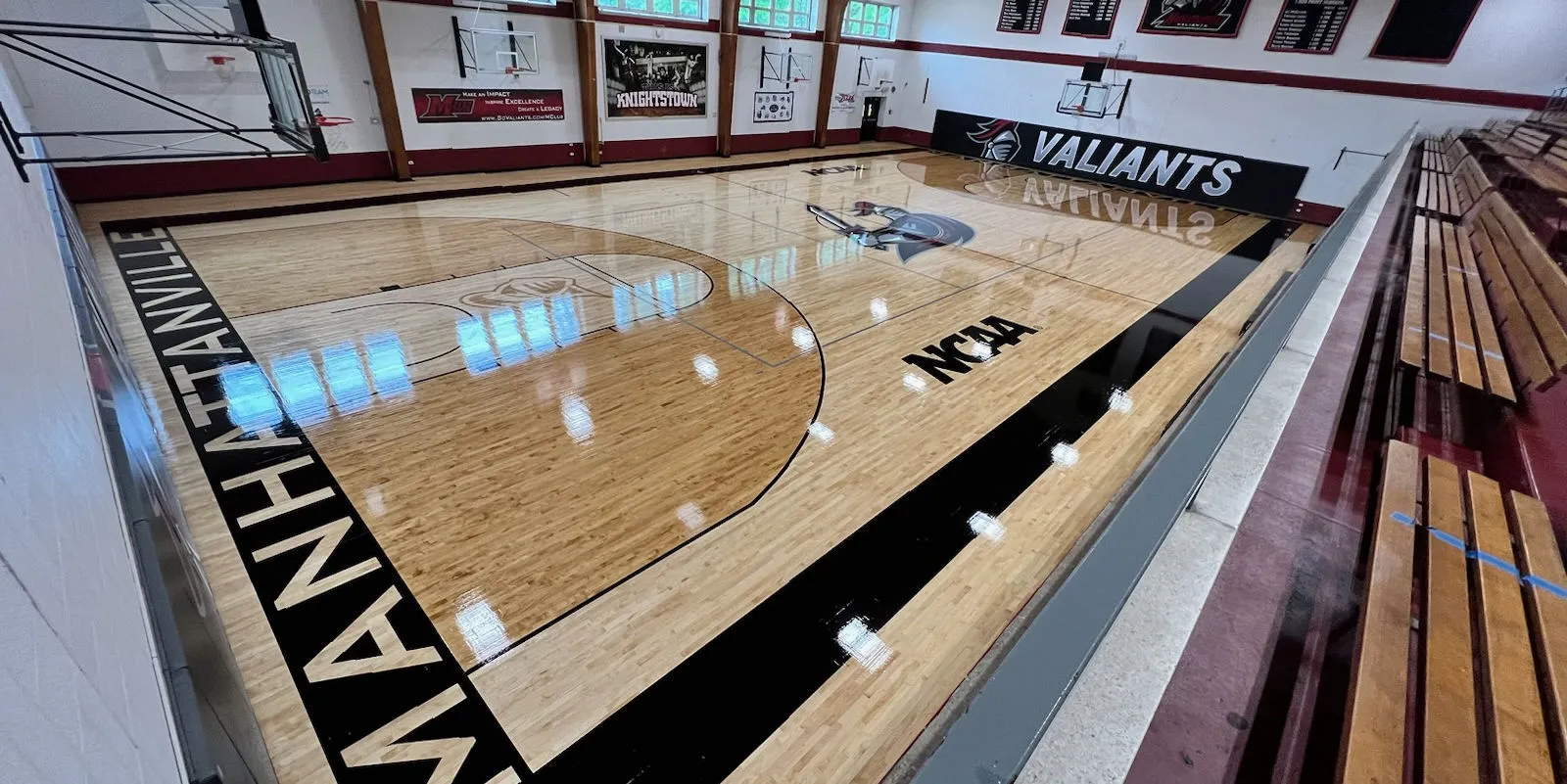
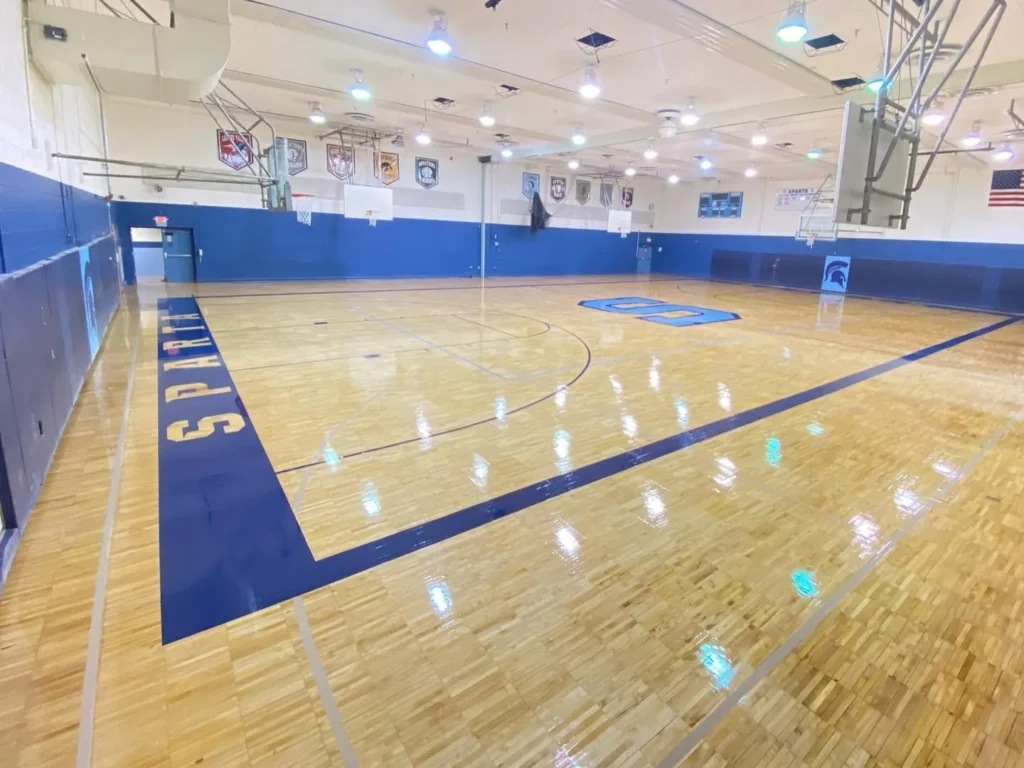
Hey there athletic directors and facility managers! Are you ready to dive into the world of hardwood gym floor repair?
Buckle up, because we’re about to take you on a journey that’ll transform you from a floor novice to a hardwood hero.
Whether you’re dealing with a squeaky board that’s throwing off your free throws or a full-court fiasco, we’ve got you covered. So, let’s lace up our metaphorical sneakers and hit the ground running!
First: The Importance of a Well-Maintained Gym Floor
- Maple sanding & refinishing since 2001
- 50,000+ projects completed
- Custom logos & game lines
- Dustless screen & recoat
Picture this: It’s the championship game, the score is tied, and your star player is dribbling down the court for the winning shot. Suddenly, they hit a dead spot on the floor, the ball doesn’t bounce back, and… well, let’s just say the trophy case stays empty for another year. Ouch!
This scenario might be a bit dramatic, but it illustrates why maintaining your hardwood gym floor is crucial. A well-kept floor isn’t just about looks (though a gleaming court is pretty sweet); it’s about safety, performance, and longevity. It’s the literal foundation of every game, practice, and P.E. class that happens in your gym.
But here’s the kicker: Hardwood gym floors are like that one friend who looks tough but is actually pretty sensitive. They need regular TLC to stay in top shape. Neglect them, and you’ll be facing more than just a few splinters – we’re talking potential injuries, costly repairs, and a floor that looks like it’s been through a few too many dodge ball tournaments.
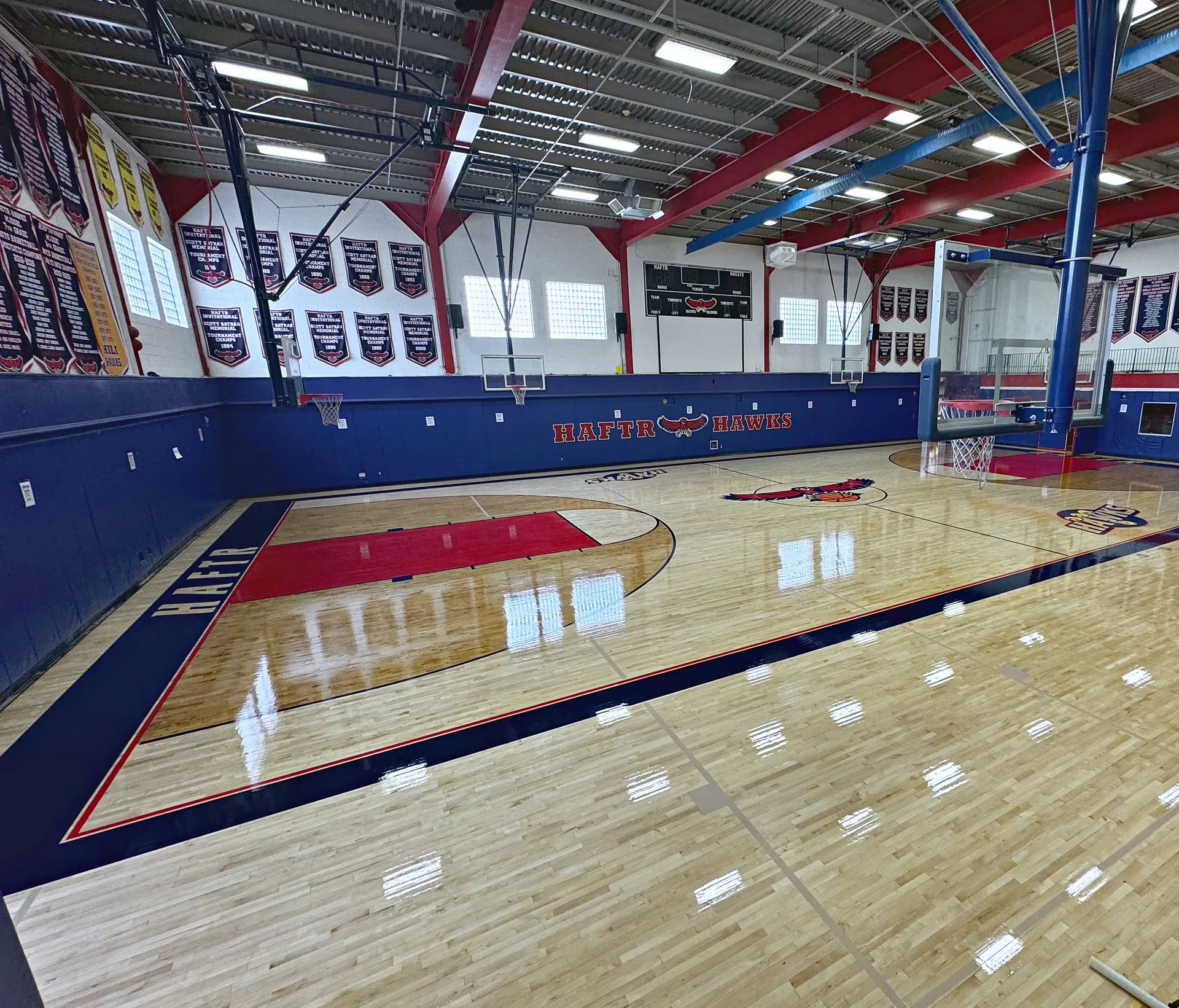
Understanding Hardwood Gym Floors
Anatomy of a Gym Floor
Think of your gym floor as a layered cake, but instead of frosting and sponge, we’ve got some seriously tough materials working together:
- Subfloor: This is the foundation, typically concrete or plywood. It’s like the bedrock of your floor, providing stability and support.
- Vapor Barrier: Next up is a thin layer that acts like a bouncer at a club, keeping unwanted moisture from crashing the party.
- Sleepers or Anchors: These are the unsung heroes of shock absorption. They give the floor its bounce and help prevent injuries.
- Plywood Layer: Not all floors have this, but if yours does, it’s adding extra stability and helping distribute weight evenly.
- Hardwood Surface: This is the star of the show – the actual wood you see and play on. Usually maple, this layer is what takes all the action and looks good doing it.
- Finish: The final layer is like the floor’s sunscreen – it protects against wear and tear, enhances the wood’s natural beauty, and provides that perfect amount of slide and grip for optimal play.
Common Hardwood Types
| Wood Type | Hardness (Janka Scale) | Pros | Cons |
|---|---|---|---|
| Maple | 1,450 lbf | Extremely durable, light color (great for visibility), tight grain (less moisture absorption) | Can be costly |
We work on maple floors only.
Signs Your Gym Floor Needs Repair
- Recoat: 1 day of work + 3–5 days to dry
- 20+ years on gym floors
- Built to MFMA standards
- Schools, colleges, clubs & home gyms
Physical Damage
- Cracks: If your floor is starting to look like the Grand Canyon, you’ve got a problem. Cracks can indicate structural issues or moisture problems.
- Gaps: Seeing daylight between your floorboards? That’s not normal. Gaps usually result from humidity changes, causing the wood to shrink.
- Loose Boards: If you’ve got boards doing the cha-cha every time someone dribbles a ball, that’s a sign of trouble.
- Scratches and Dents: A few battle scars are normal, but if your floor looks like it just went ten rounds with a wolverine, it might be time for some TLC.
Moisture Damage
- Buckling: This is when parts of your floor decide they want to be a ski jump. Buckling happens when wood absorbs moisture and expands, pushing upwards.
- Cupping: If your floorboards are starting to look like tiny canoes, with the edges higher than the center, you’ve got cupping.
- Water Stains: Dark spots or discoloration can indicate water damage. If your floor is starting to look like a tie-dye T-shirt, it’s time to investigate.
Surface Wear
- Dull Finish: Remember how your floor used to shine like a freshly polished trophy? If it’s looking more like an old penny now, your finish is wearing thin.
- Peeling Finish: If the finish is flaking off like a bad sunburn, you’ve got problems. This can leave your wood exposed and vulnerable.
- Discoloration: Uneven coloring or dark spots (that aren’t water stains) can indicate wear and tear or sun damage.
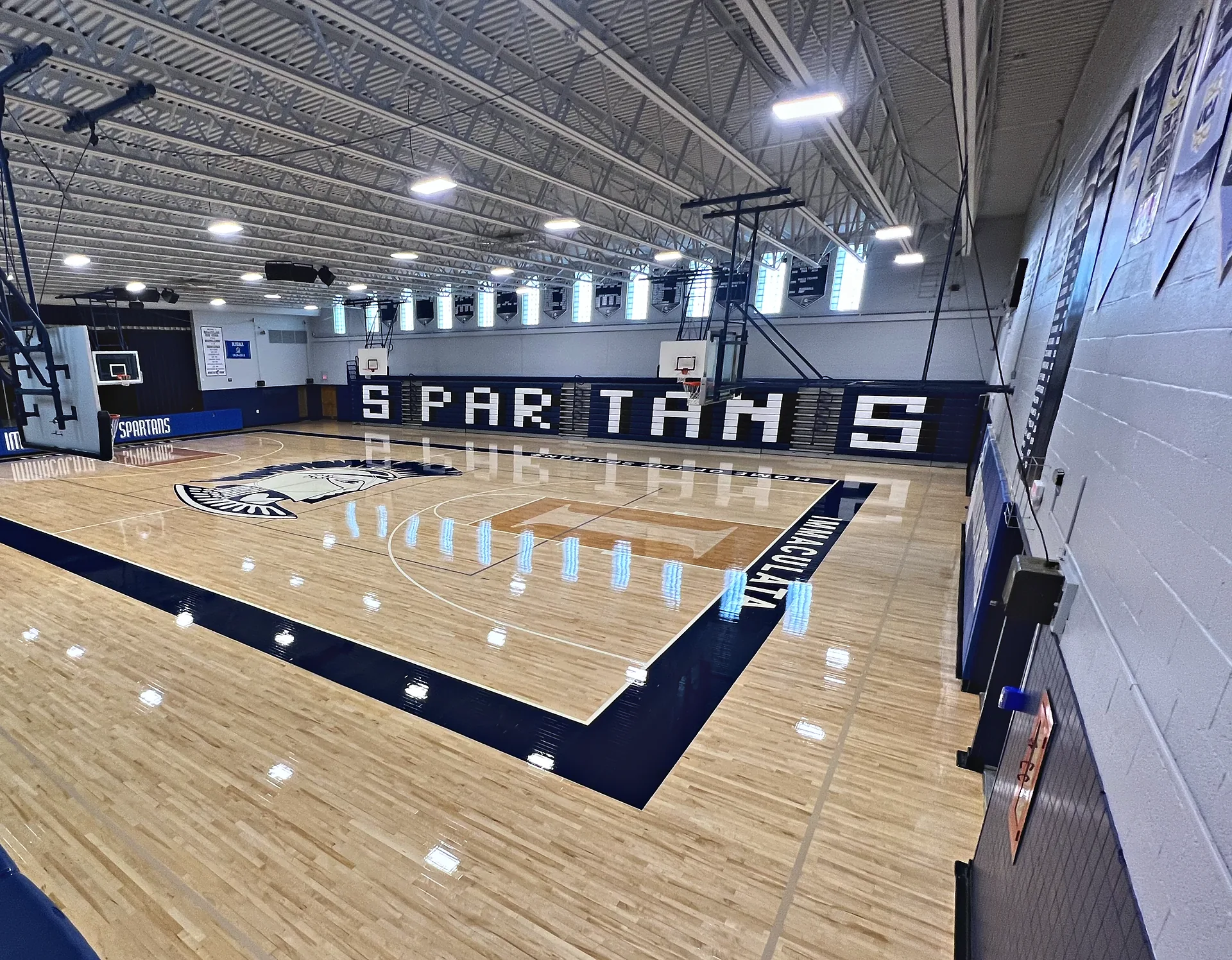
When to Call the Pros
Structural Issues
- Loose Boards: If you’ve got more than a couple of boards doing the rumba, it’s time to call in reinforcements.
- Subfloor Problems: If your floor has more waves than a beach in Hawaii, you might have subfloor issues.
- Widespread Gaps or Cracks: A small gap here or there might be a DIY fix, but if your floor looks like a jigsaw puzzle, call the pros.
Extensive Damage
- Large-Scale Water Damage: If your gym looked more like a swimming pool after a leak or flood, don’t try to handle it yourself.
- Significant Wear in High-Traffic Areas: If certain parts of your floor look like they’ve seen more action than a Black Friday sale, it might be time for professional refinishing or board replacement.
- Multiple Dead Spots: One dead spot might be a fluke, but several could indicate a more serious underlying issue.
Full Refinishing
- Every 6-10 Years: Even if your floor looks okay, experts recommend a full refinishing every 6-10 years.
- After Major Events or Heavy Use: If your gym hosted a monster truck rally (hey, we don’t judge), it might need a full refinish to recover.
- Change in Sport Lines or Design: Want to add pickleball courts or update your school logo? A full refinish is often necessary to ensure a clean slate for new designs.
Causes of Damage: The Usual Suspects
Environmental Factors
- Humidity Fluctuations: Wood is like that friend who’s always hot or cold – it expands and contracts with changes in humidity.
- Temperature Changes: Extreme temperature swings can also cause wood to expand and contract.
- Leaks and Flooding: Water is your floor’s kryptonite. Whether it’s a slow leak from a faulty pipe or a full-on flood from a broken water main, moisture can wreak havoc on hardwood.
Physical Impact
- Heavy Equipment: Dropping weights, dragging bleachers, or rolling heavy equipment across the floor can leave dents, scratches, or even cracks.
- High Foot Traffic: Over time, even the pitter-patter of countless feet can wear down your floor’s finish, especially in high-traffic areas.
- Improper Footwear: Ice skates on hardwood? Bad idea. But even regular street shoes can cause damage.
Maintenance Neglect
- Improper Cleaning: Using the wrong cleaning products or techniques is like feeding your floor a steady diet of junk food.
- Lack of Regular Maintenance: Skipping routine cleaning and inspections is like ignoring that weird noise your car’s been making.
- Delaying Repairs: That small scratch? It can turn into a big problem if water gets in. That slightly loose board? It could become a tripping hazard.
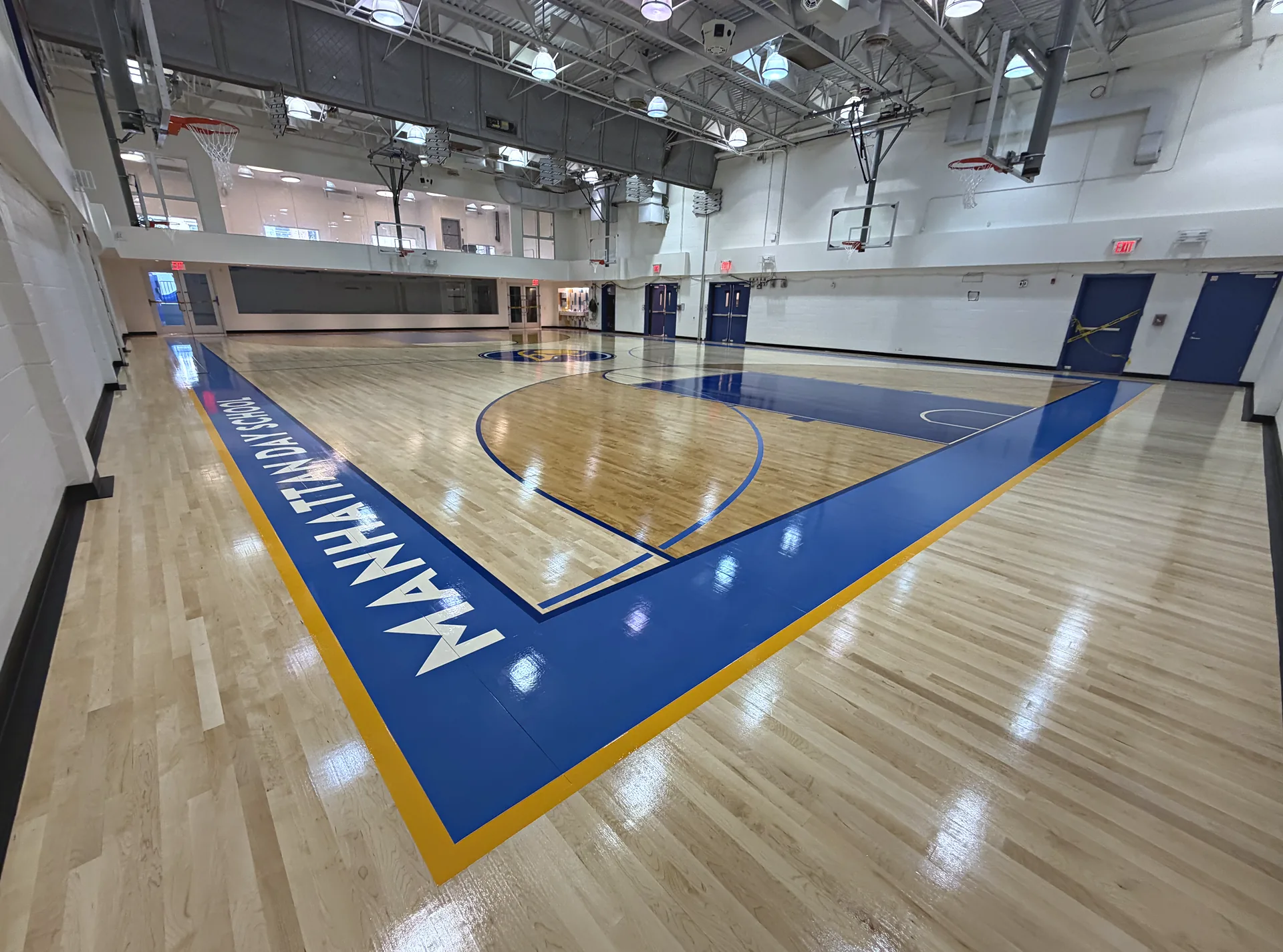
DIY Repair Techniques: Roll Up Your Sleeves
Minor Repairs
Fixing Small Scratches
- Clean the area with a hardwood floor cleaner.
- Lightly sand with fine-grit sandpaper (220 grit or higher).
- For deeper scratches, use a wood filler that matches your floor color.
- Touch up the finish with a color-matched wood stain marker or thin coat of polyurethane.
Dealing with Minor Gaps
- Clean the gap using a vacuum with a narrow nozzle.
- For gaps less than 1/4 inch wide, use a latex filler designed for wood floors.
- Once dry, sand the filler flush with the floor and apply a matching finish.
Tightening Loose Boards
- Locate the exact location of loose boards.
- If possible, secure from below by driving a screw up through the subfloor into the bottom of the loose board.
- If securing from above, use a countersink bit to drill pilot holes and drive screws in, covering with wood filler.
Cleaning and Maintenance
Daily Cleaning
- Use a microfiber dust mop daily to remove dirt and debris.
- Clean up spills immediately with a slightly damp cloth.
Weekly Deep Clean
- Vacuum with a soft-bristled floor attachment.
- Damp mop with a well-wrung mop and pH-neutral hardwood floor cleaner.
Professional Repair Processes: Leave It to the Experts
Assessment and Planning
- Visual Inspection: Professionals will conduct a thorough examination of your floor.
- Moisture Testing: Using specialized meters, they’ll check moisture levels in the wood and subfloor.
- Subfloor Evaluation: They’ll assess the condition of the subfloor, which is like checking the foundation of a house.
Repair Techniques
Board Replacement
- Damaged boards are carefully cut out and removed.
- New boards are selected to match the existing floor.
- The new boards are expertly fitted and secured.
Sanding and Refinishing
- The gym is sealed off to contain dust, and all equipment is removed.
- The floor is sanded down to bare wood, removing the old finish and leveling the surface.
- The floor is thoroughly cleaned to remove all sanding dust.
- Stain is applied if desired.
- Multiple coats of a durable gym floor finish are applied.
Advanced Solutions
- Dust-Containment Sanding: Sanding equipment with built-in vacuum systems captures about 98% of the dust, though a full sand still makes some dust. Our screen and recoat system is completely dustless.
- UV-Cured Finishes: These high-tech finishes cure instantly under UV light.
- Spot Repairs: For localized severe damage, pros can replace small sections of flooring.
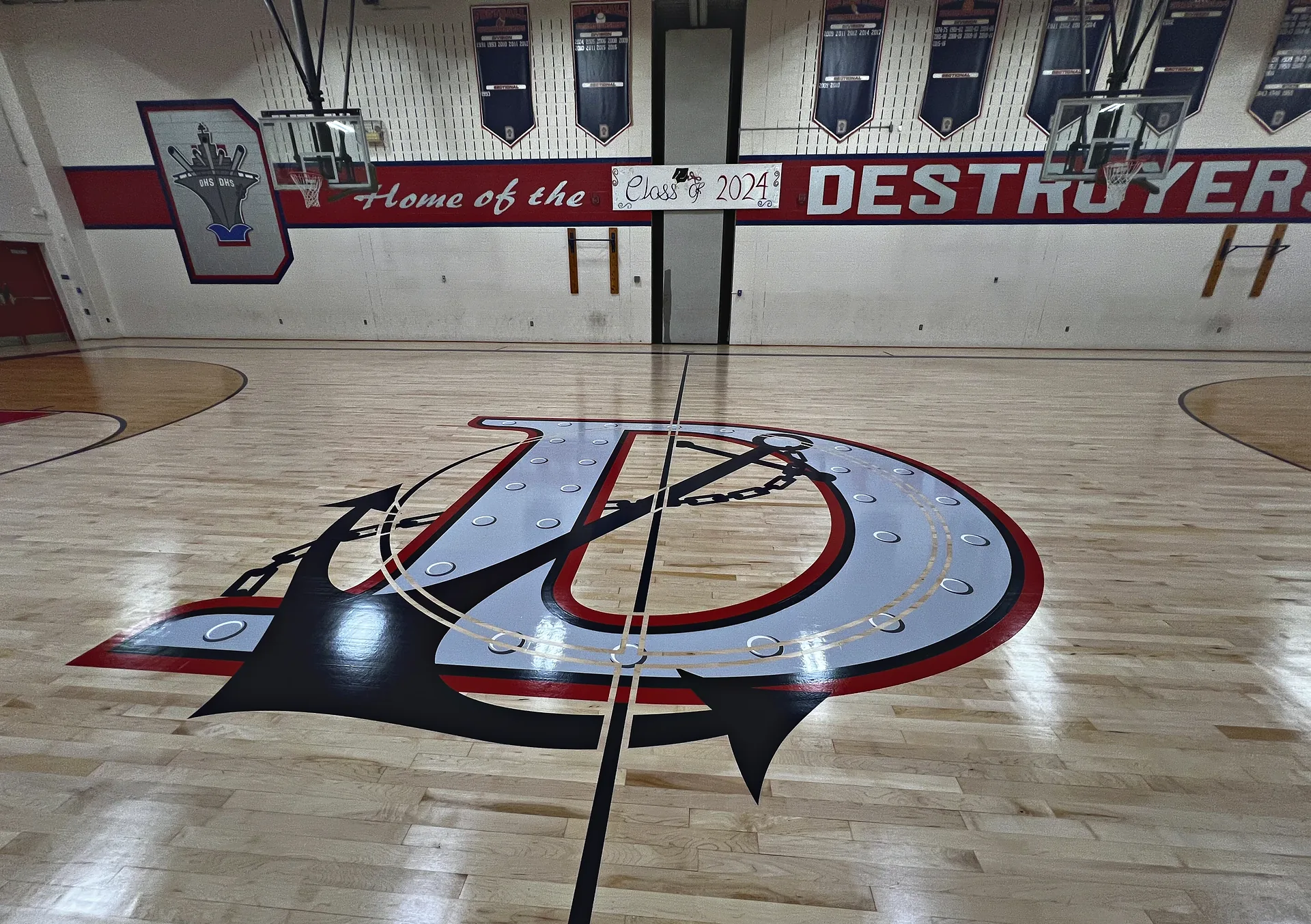
Preventive Maintenance: An Ounce of Prevention
Daily and Weekly Tasks
Daily Dust Mopping
- Use a microfiber dust mop or a soft-bristled broom.
- Start at one end of the gym and work your way to the other, overlapping your strokes to ensure full coverage.
- Don’t forget the corners and edges – dust loves to hide there!
Immediate Spill Clean-Up
- Use a clean, slightly damp cloth to wipe up spills immediately.
- For sticky spills, use a pH-neutral cleaner approved for hardwood floors.
- Avoid letting water sit on the floor for any length of time.
Weekly Cleaning
- Vacuum the floor with a soft brush attachment.
- Damp mop with a well-wrung mop and a cleaner specifically designed for hardwood gym floors.
- Allow the floor to air dry completely before use.
Monthly and Annual Care
Monthly Inspections
- Walk the entire floor, looking for loose or squeaky boards, new scratches or dents, signs of water damage or warping, and wear in the finish.
- Document any issues you find and address them promptly.
Quarterly Deep Cleaning
- Use an auto scrubber with a white pad and a pH-neutral cleaner.
- Go over the entire floor, being careful not to over-wet any areas.
- Allow ample drying time before use.
Annual Professional Inspection
- Schedule an inspection with a reputable gym flooring company.
- They’ll check for structural issues, assess wear patterns, and recommend any necessary treatments or repairs.
Long-Term Strategies
Climate Control
- Maintain consistent temperature (60-80°F) and humidity (35-50%) levels year-round.
- Use HVAC systems, dehumidifiers, or humidifiers as needed.
- Install a hygrometer to monitor humidity levels easily.
Protective Measures
- Use walk-off mats at all entrances to catch dirt and moisture.
- Place protective pads under heavy equipment.
- Use floor covers for non-sporting events.
The Cost of Repairs: Budgeting for Your Floor’s Future
Typical Costs
- Screen and recoat: about $0.30–$0.60 per square foot
- Sanding and refinishing: about $3–$7 per square foot
- Repairs and board replacement: Free estimate
- Partial or full floor replacement: Free estimate
- Inspections and deep cleaning: Free estimate
Price depends on size and condition. Free estimate.
Budgeting Tips
- Plan for screening and recoating every year, and full sanding and refinishing every 6-10 years.
- Consider long-term savings: Investing in high-quality materials and regular maintenance can save money in the long run.
- Get multiple quotes for major repairs or refinishing.
- Look for multi-year contracts with floor care companies for potentially discounted rates.
Typical Gym Floor Repair Projects
Flood Damage After a Storm
Scenario
A school gym floor is flooded after a major storm and sits under water before it can be dried out.
Damage
- Severe buckling across much of the floor
- Mold growth under the floorboards
- Damaged subfloor and vapor barrier
Solution
- Complete removal of the hardwood floor and subfloor
- Thorough drying and mold remediation of the concrete slab
- Installation of a new vapor barrier and subfloor system
- Installation of a new hardwood floor with improved water-resistant features
- Application of a moisture-cured urethane finish for added protection
Lesson Learned
Disaster preparedness is crucial. A flood response plan and quick-deploy floor covers help limit damage in future emergencies.
Future Trends in Gym Floor Technology
Smart Floors
Integrated Sensors
Smart sensors embedded in the floor could provide real-time data on:
- Foot traffic patterns
- Impact zones
- Moisture levels
- Temperature fluctuations
Performance Tracking
Smart floors could potentially track athlete performance metrics like:
- Jump height
- Running speed
- Cutting angles
Advanced Materials
Synthetic-Hardwood Hybrids
Development of hybrid floors that combine the look and feel of wood with the durability and low maintenance of synthetic materials.
Nano-Coatings
Nanotechnology in floor finishes promising:
- Enhanced durability
- Improved scratch resistance
- Self-cleaning properties
- Better moisture protection
Sustainability Focus
Eco-Friendly Materials
Increased use of sustainably sourced woods and low-VOC materials in both the flooring and subfloor systems.
Energy Efficiency
Future gym floors might incorporate materials that help with temperature regulation, reducing the energy needed to heat and cool the facility.
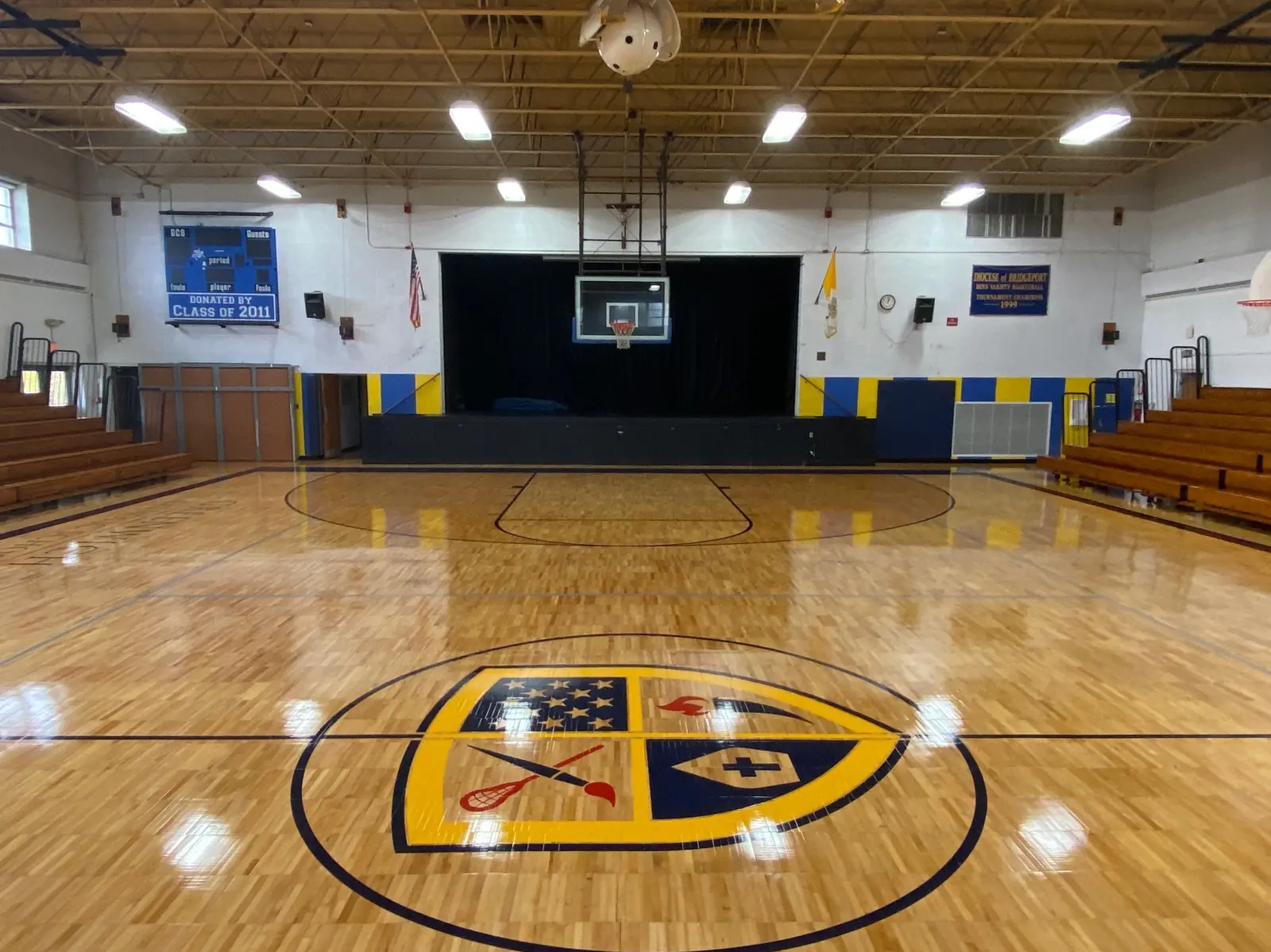
Conclusion: Keeping Your Court in the Game
Caring for a hardwood gym floor is a bit like coaching a championship team. It requires dedication, knowledge, and a good game plan. But with the right approach, your floor can remain a star player for decades to come.
Key takeaways:
- Regular maintenance and proper care can prevent many common issues and extend the life of your floor.
- Know when it’s time to call in the professionals for more complex repairs or refinishing.
- Invest wisely in maintenance and timely repairs to avoid premature floor replacement.
- Stay informed about new technologies and best practices in gym floor care.
- Remember, a well-maintained floor isn’t just about looks – it’s crucial for safety and performance.
So, the next time you step onto your gym floor, take a moment to appreciate the craftsmanship beneath your feet. That gleaming hardwood isn’t just a surface – it’s a stage for athletic greatness, a foundation for community gatherings, and a testament to the care you’ve put into maintaining it.
Time-Lapse Videos
FAQs: Your Burning Questions Answered
Q: How often should I refinish my gym floor?
A: Generally, a gym floor should be screened and recoated every year and fully sanded and refinished every 6-10 years. However, this can vary based on usage and maintenance practices.
Q: Can I use regular household cleaners on my gym floor?
A: No! Regular household cleaners can damage the finish on your gym floor. Always use cleaners specifically designed for hardwood gym floors.
Q: Why is my gym floor squeaking?
A: Squeaking is often caused by loose boards or nails, or by boards rubbing against each other due to changes in humidity. Minor squeaks can often be fixed with talcum powder or special lubricants, but persistent squeaking may require professional attention.
Q: How can I prevent scratches on my gym floor?
A: Use entrance mats to catch dirt and grit, enforce a proper shoe policy, use protective pads under equipment, and clean the floor regularly to remove abrasive particles.
Q: Is it normal for my gym floor to expand and contract with the seasons?
A: Yes, wood naturally expands and contracts with changes in humidity. However, excessive movement can indicate a problem with humidity control in your facility.
Our Service Area
We’re based in Northern New Jersey and work the whole East Coast, mainly NJ, NY, PA, CT, MD & DE.
J & J Gym Floors is a full-service gym floor company. Established in 2001, we’ve completed more than 50,000 projects for various types of facilities: NBA basketball courts, college gym floors, high school gymnasiums, K-8 athletic sports floors as well as fitness centers, YMCAs and Jewish Community Centers. We’ve also done some amazing work for homeowners and professional athletes!
We specialize in: gym floor screening and recoating, basketball court sanding and refinishing, new gym floor installations, gymnasium wall padding, expert gym floor repairs as well as gym floor designs, graphics, logos and game lines.
Whether you’re in the bustling boroughs of New York City (including Manhattan, Brooklyn, The Bronx, Queens, and Staten Island), the Garden State of New Jersey, or anywhere in Connecticut, Pennsylvania, Delaware, Maryland, Rhode Island, Virginia, West Virginia, Massachusetts, Vermont, New Hampshire, or Maine, we’ve got you covered. From the sunny shores of Florida, the football tradition of Ohio, the historic charm of South Carolina, the diverse landscapes of North Carolina, and the picturesque state of Georgia.
Don’t see your location? Let’s chat!
States: West Virginia, South Carolina, Ohio, North Carolina, New Hampshire, Massachusetts, Maine, Georgia, Florida, New York, Vermont, New Jersey, Connecticut, Pennsylvania, Virginia, Delaware, Rhode Island, Maryland, NYC, Brooklyn, Queens, Staten Island, The Bronx, Manhattan
Wall Pads
Custom designs and pro installation
Popular Blog Posts
Recent Projects
- The Pingry School (Basking Ridge, NJ): both gym floors replaced with new maple in 2019, plus years of upkeep
- Immaculata High School (Somerville, NJ): full sand, refinish and yearly recoats
- Bangor Area School District (Bangor, PA): new maple high school gym floor and wall pads
- Greenwich Catholic School (Greenwich, CT): full sand and refinish with new game lines and center crest
Ready to Talk About Your Project?
We’re open 24 hours, 7 days a week. Call or send us your project for a free quote.