

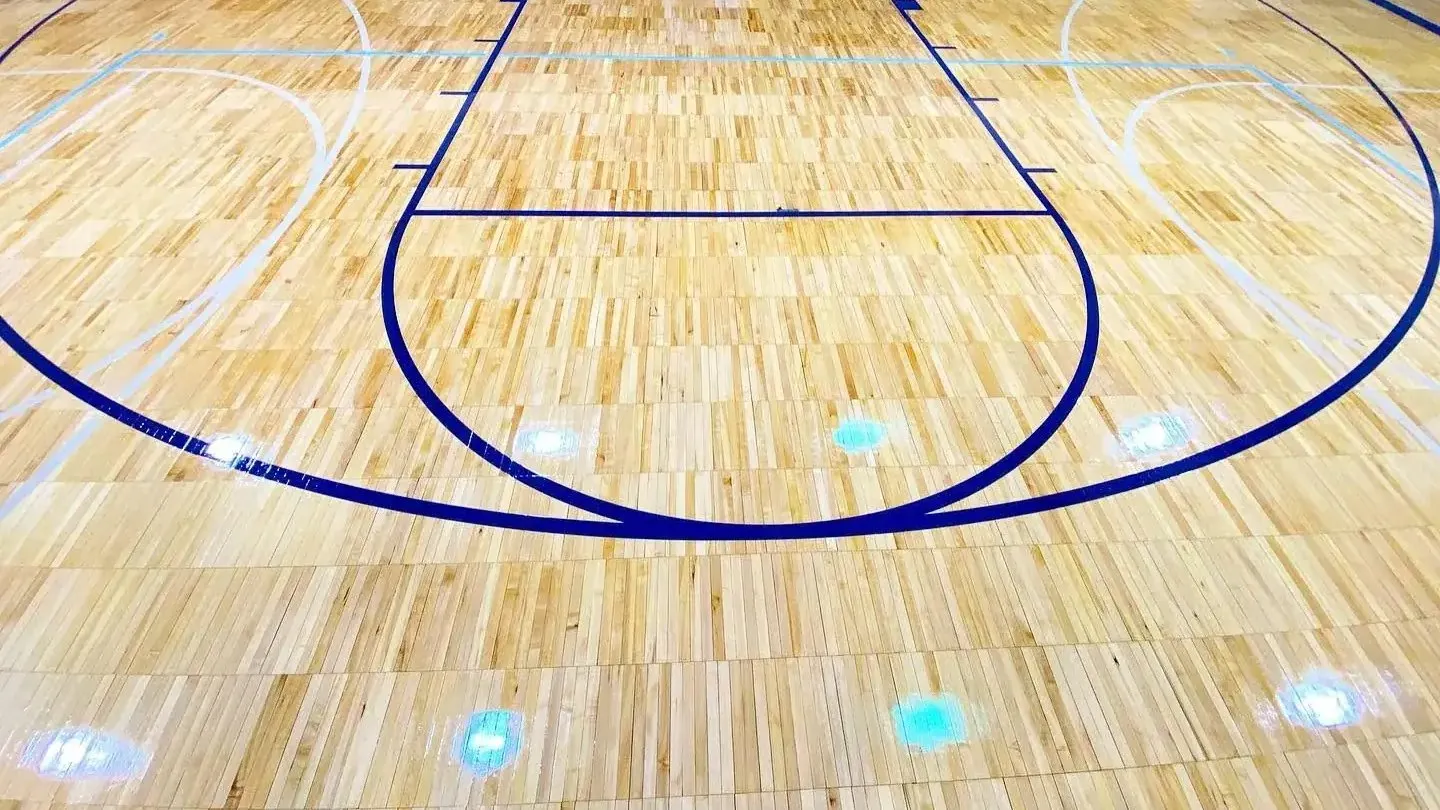
How to Add Pickleball Lines to Your Gym Floor
Yes, you can add pickleball lines to your gym floor without tearing anything out. We paint pickleball lines on existing basketball courts all the time. The trick is a smart layout, a line color that doesn’t confuse anyone, and good timing so the new lines end up protected under a fresh coat of finish.
Here’s how many courts typically fit, how to pick colors, when to schedule the work, and what affects cost.
- Best time: during a screen and recoat or a full sand and refinish
- Typical fit: 3 pickleball courts across a standard high school basketball court
- Painted, not taped: lines go under the finish so they last
- Any floor: maple, rolled vinyl and poured floors
Why So Many Gyms Are Adding Pickleball
Pickleball draws players of every age, from PE classes to seniors’ morning leagues. For a school, church, rec center or club, the gym is often already there. Adding pickleball court lines turns that space into more programs and more rentals, without building anything new.
- New PE units and after-school clubs
- Adult and senior open play
- Rental income on nights and weekends
- Easy to learn, so turnout is high
Official Pickleball Court Size
Before anything gets painted, the layout has to be right. A regulation pickleball court is:
- 20 ft wide by 44 ft long, measured to the outside of the lines
- 2-inch-wide lines, all the same color on a given court
- A 7-ft non-volley zone (the “kitchen”) on each side of the net
- Net height of 36 inches at the sidelines and 34 inches at center
Players also need room to move outside the lines. More space behind the baselines and between courts makes play safer and more comfortable, so walls, bleachers and doors all factor into the layout.
How many pickleball courts fit on a basketball court?
On a standard high school basketball court (84 x 50 ft), the typical layout is 3 pickleball courts running across the width of the floor. A middle school court is shorter and narrower, so 3 courts usually still fit but with tighter spacing, depending on how much open floor surrounds the court. Bigger gyms with cross courts or extra space can often fit 4, 6 or more.
Every gym is different, so we measure first and show you a layout before we paint. Our guide on how to measure a basketball court is a good place to start.
Blended Lines: Picking a Color That Works
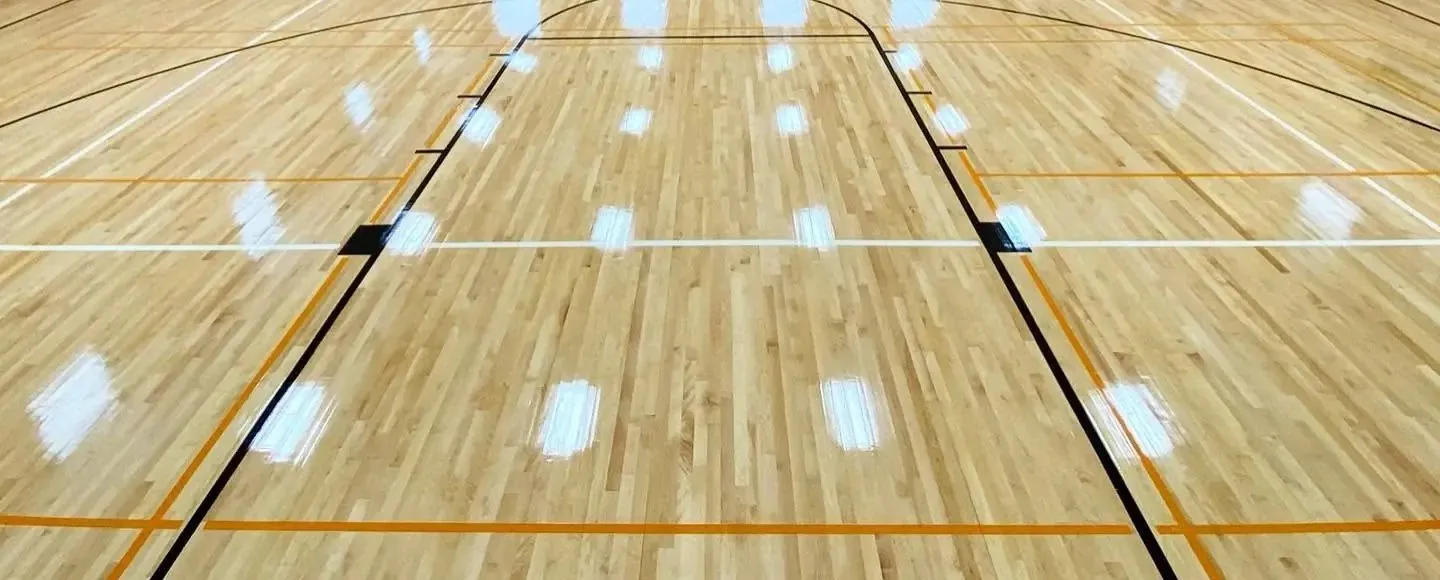
Pickleball lines on a basketball court have to share space with basketball and often volleyball lines. Too many bright colors and the floor looks busy. Too little contrast and pickleball players can’t see their lines. The goal is lines that are easy to read for the sport being played and easy to ignore for everyone else.
Common color approaches
- Contrasting color: a color that isn’t used anywhere else on the floor, so pickleball players know exactly which lines are theirs
- Blended or subtle shade: a softer tone, like light gray or a muted version of a school color, that reads up close but fades into the background from the stands
- Match your look: a shade that ties in with your logo and existing game lines
Avoiding conflicts with basketball and volleyball lines
- Basketball lines usually stay solid and on top. Pickleball lines break neatly where they cross them.
- We avoid placing pickleball lines right next to the free-throw lane or three-point arc, where a near-miss line can confuse players and officials.
- If you already have volleyball lines, we plan pickleball courts so the two sports don’t use the same color.
- We mark the layout on the floor first, so you can see it before any paint goes down.
Want help with the bigger picture? See our logos and game lines page.
How We Add Pickleball Lines to a Maple Gym Floor
Best time: during a screen and recoat or a full refinish
New lines belong under the finish, not on top of it. That’s why the best time to add them is when your floor is already getting a new coat.
- During a screen and recoat: we abrade the old finish, lay out and paint the pickleball lines, then put a fresh coat of finish over the whole floor. This work is dustless.
- During a full sanding and refinishing: the floor goes down to bare maple, so we can lay out every line from scratch, including pickleball. Our sanding equipment catches about 98% of the dust.
Floor in good shape? We can still add them
If your floor isn’t due for a recoat, we can still add lines. We scuff the finish so the paint bonds, paint the lines, then recoat over them. That keeps the new lines protected and the sheen even across the court.
Painted lines, not tape
Tape lines peel, collect dirt and can pull finish off when they’re removed. Painted lines under finish last for years. (We wrote more about this in why painter’s tape on a gym floor is risky.)
Paint, finish and cure time
- We use line paints that are compatible with the finish going over them, following MFMA guidelines and the finish manufacturer’s instructions.
- Each line is masked by hand for crisp, straight edges at the correct 2-inch width.
- Paint dries fully before any finish goes on top.
- After the final coat, the finish needs time to cure before heavy play. We’ll give you exact dates.
Pickleball Lines on Synthetic Floors
Not a wood gym? Our team can also paint pickleball lines on rolled vinyl and poured floors, using paints made for those surfaces. Layout and color planning work the same way.
Nets: Portable or Floor Sleeves
- Portable nets roll out for play and store away after, which is how most gyms start
- Floor sleeves are set into the floor for permanent net posts and close with cover plates when not in use. See our volleyball sleeves and floor plates.
For more on dedicated courts, visit our pickleball court floors page.
What Affects the Cost
Every gym is different, so we quote each job after seeing the floor. The main factors:
- Number of courts and colors
- Condition of the floor and finish
- Whether it’s paired with a recoat or full sand (usually the best value)
- How many existing lines the layout has to work around
- Floor type: maple, rolled vinyl or poured
- Schedule and location
Timeline
- Added during a screen and recoat: adding lines is usually done alongside a screen and recoat, so it fits into the same short visit. We’ll give you the exact timeline with your quote
- Added during a full sand and refinish: 8 to 10 working days, plus about a week to cure
- Plan ahead: summer and school breaks book up fast
Frequently Asked Questions
Yes. If the floor is in good shape, we scuff the finish, paint the new pickleball lines, and then put a fresh coat of finish over them. Full sanding isn’t required.
A standard high school basketball court typically fits 3 pickleball courts across its width. Middle school courts often fit 3 with tighter spacing, and larger gyms can fit 4, 6 or more.
Pick a color that isn’t already used for basketball or volleyball, or a softer blended shade that’s easy for pickleball players to see but doesn’t distract during other games.
Not when they’re planned well. Basketball lines stay solid, pickleball lines break where they cross, and a distinct or subtle color keeps the floor easy to read for players and officials.
Yes. Our team paints pickleball lines on rolled vinyl and poured floors with paints made for those surfaces.
Related reading: gym floor marking and striping basics and indoor volleyball court floors.
Ready to Add Pickleball to Your Gym?
J and J Gym Floors has been lining, refinishing and installing gym floors since 2001, with 50,000+ projects. Based in Wayne, we handle NJ gym floor refinishing and work up and down the East Coast. We stand behind our work and our reputation proves it. Send us a photo of your gym and we’ll tell you how many courts fit and the best time to add them. Prefer to talk? Call 973-801-7219.
